

How We Choose Great Wines at Skagit Valley Larder
The "Can't Stop Thinking About It" Test
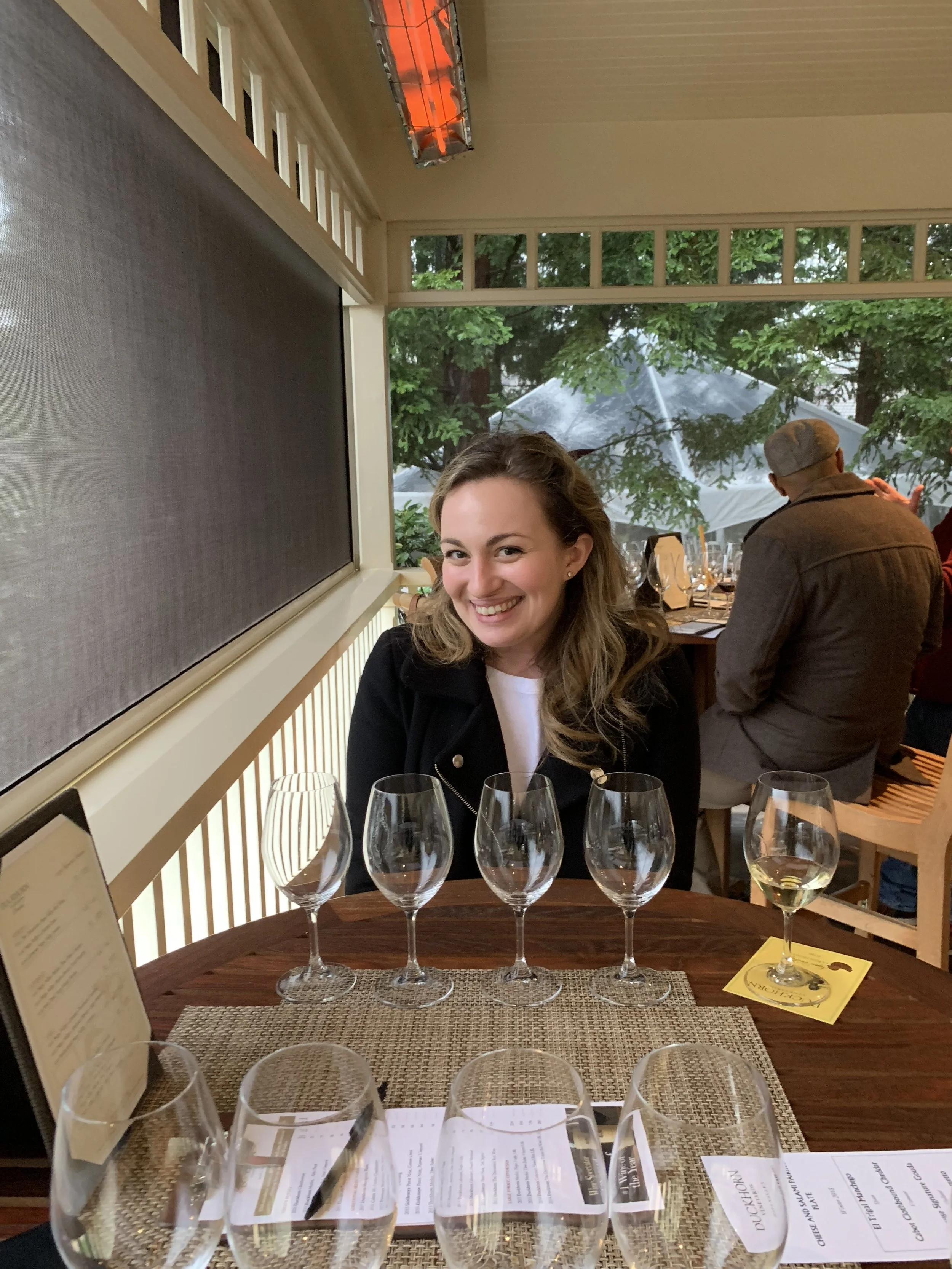
January 2019, Duckhorn Winery
There is a running joke in the wine world that the hardest part of the job isn't finding good wine—it's refusing to settle for it.
After fifteen years in the glass, I’ve learned that a wall filled with hundreds of bottles usually just creates noise. Real curation takes discipline. It means passing on perfectly fine wines so you can hold out for the absolute showstoppers—the ones that earn a special mark in my tasting notebook: "Can't stop thinking about it."
If a bottle doesn't hit that standard, it doesn't earn a spot on our shelves. Period.
Here is a look inside the notebook and the exact criteria we use to hunt down every single wine at Skagit Valley Larder.
1. It Starts with Taste (and Fifteen Years of Training)
First and foremost: Is it delicious? Can you drink it right now? Is it representative of what it’s trying to be?
Developing that kind of palate confidence doesn't happen overnight. Over the last 15 years, I’ve been privy to some incredible wine rooms. At Beecher’s in NYC, we curated an all-domestic list that made us stand out in a sea of European-heavy menus (I still remember when Finger Lakes wines were breaking out, and when Cakebread Chardonnay was the hot bottle). At Rosemary’s and Tarallucci e Vino, I fell hard for Italian wine—learning that Prosecco can be both cheap and fantastic, drunk straight from tap carafes like beer.
Between those restaurants, working as a distributor, and working in shops like Compass Wines and Seifert & Jones, I’ve tasted & poured thousands of bottles. When you taste that much wine, you develop an instinct for taste levels. You instantly recognize the shift between a good Chardonnay and a truly great one. I steer clear of extreme, gimmick-driven profiles in favor of balance— and aim for wines that are classics or delightfully unique, but above all, universally joyful to drink.
2. Purity, Craft, and the "Anti-Button" Standard
Next, I look at how the wine was produced.
Some wines are mass-produced at the press of a button with zero human touch. When factory rules apply to drink, things get weird fast. Wines can be packed with additives, mega-purple dyes, and heavy processing. And don't be fooled by greenwashing—a wine can be labeled "vegan" or carry fancy marketing labels while still containing nasty additives, or it can be "totally natural" and taste... well, gross.
I don't strictly adhere to dogmatic buzzwords like organic, biodynamic, natty, or low-intervention. An uncertified wine from a tiny family farm can be completely honest, pure, and well-made. My goal is simple: select clean, small-batch wines made by real people who care deeply about their craft and leave the grapes alone so the vineyard can actually shine.
3. Renowned Importers (The Ultimate Stamp of Approval)
Working in distribution teaches you the insider map of the wine world: the importers. Over time, you learn which import portfolios hold non-negotiable standards. When you see specific importer stamps on the back of a bottle, you instantly know the baseline quality, taste level, and ethics behind it. We lean heavily on these trusted curators to bring the absolute best European and benchmark bottles straight to our shelves.
4. The $25 Sweet Spot
If you’re looking for a $7 bottle, head to Costco. Mass retailers buy extreme, industrial volume to push prices that low, but those aren't the wines we play with.
We aim right for the middle—an average price point of around $25. It’s the sweet spot for a Tuesday night dinner or a last-minute dinner party gift. My rule for pricing is straightforward: your $25 bottle should always taste like a $40 bottle. (And yes, a few of our absolute favorite, high-flying steals sit right around $18–$20!)
5. Old World Classics Meets the New Generation
You’ll always find classic Old World bottles here—if you’ve seen our French wine problem, you already know my heart lies in European terroir! But in every region, there’s a new generation of winemakers pushing boundaries, reviving forgotten native grapes, or experimenting with lighter styles. Our Top 50 balances both: timeless classics you can rely on, and fresh, untasted discoveries to keep things exciting.
6. The Story (and Yes, the Label)
The overall value of a wine shoots up the moment it comes with a great tale to tell. Stories give wine soul, and passing them along to your friends at the dinner table is half the fun.
And let's be honest about labels: I’m never going to let you bring an ugly bottle to a dinner party! You can have a gorgeous, design-forward label paired with a world-class wine inside. You don't have to choose.
What The Top 50 Means for You
Trimming our shelves down to 50 dedicated bottles means our staff gets to know every cork intimately, our live online store inventory is always accurate, and our weekly tastings directly reflect the best of what we hold. Most importantly, buying whole cases of these 50 gems unlocks volume savings that we get to pass straight to our wine club members.
Stop by the shop this week, grab a glass, and let us show you what made the cut!